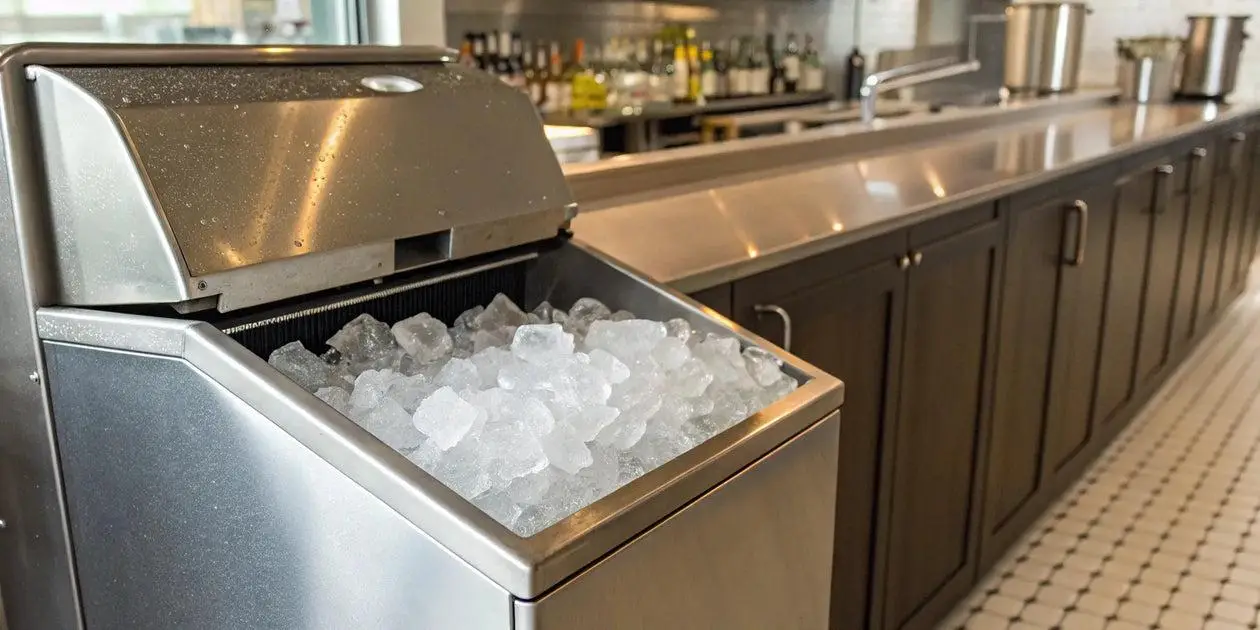
You open your ice machine bin and find it: a pink, grey, or orange film clinging to the walls. That slime is not just unappealing — it is a direct food safety problem. Consequently, every piece of ice that passes through a contaminated machine carries that contamination with it. Knowing what causes slime and how to respond keeps your operation compliant and your customers safe.
Slime in ice machines comes from two main sources: biofilm and yeast. Biofilm is a community of bacteria that attaches to surfaces and builds a protective layer over itself. Yeast produces the familiar pinkish-orange tint that many operators notice first. Both thrive in the warm, wet interior environment of an ice machine. Specifically, they grow fastest in areas with poor water flow, including water distribution tubes, evaporator plates, and the storage bin. When you contact Freedom Appliances for ice maker and ice machine repairs, our technicians inspect all of these zones during every service visit.
Why Slime Grows So Quickly
Ice machines create ideal conditions for microbial growth. They are constantly wet, run at moderate temperatures during the ice-making cycle, and receive warm, humid ambient air every time someone opens the bin. Furthermore, many machines sit in the back of a kitchen where cleaning frequency drops during busy periods.
Water quality plays a major role. Calgary’s municipal water contains minerals that leave scale deposits inside the machine. That mineral scale gives biofilm something to grip. Therefore, machines in high-hardness water areas — which includes much of Calgary and surrounding communities — need more frequent descaling than the manufacturer’s baseline recommendation.
Many business owners do not realize that slime problems can spread across equipment. Your commercial fridge repair calls may increase if contaminated drainage from an ice machine backs up into an adjacent refrigerator. In commercial kitchen layouts, shared drain lines connect multiple units. Consequently, poor ice machine hygiene creates a ripple effect.
How to Clean Slime from an Ice Machine
Start by removing all ice from the bin. Never serve ice during a cleaning cycle. Use an NSF-certified ice machine cleaner and follow the manufacturer’s dilution instructions precisely. Specifically, these cleaners dissolve both mineral scale and biofilm. Run the cleaning cycle fully — do not cut it short.
After the cleaner cycle, run a sanitizing rinse. This step kills remaining bacteria on surfaces the cleaner has already stripped. Furthermore, wipe down the bin walls, lid, and ice scoop holder by hand using a food-safe sanitizing solution. Allow the machine to run two to three ice-making cycles and discard that ice before returning the machine to service.
For stubborn biofilm, you may need a second cleaning cycle or a manual scrub of the evaporator plate. However, if slime returns within a week or two of a full clean, you have a mechanical problem — not just a hygiene problem. Issues like low water pressure, a failing water inlet valve, or a worn pump can cause water to pool and stagnate inside the unit. This is the point where commercial freezer repair and refrigeration professionals become essential.
Pink Slime vs. Grey or Black Slime
Pink slime typically indicates yeast or a bacterium called Serratia marcescens. It is common and responds well to standard cleaning products. Grey or black slime, however, suggests mould. Mould in an ice machine is more serious. It penetrates porous materials and can survive a standard cleaning cycle. If you see dark slime, call a technician rather than attempting to clean it yourself.
Cleaning Schedule for Calgary Food Service Businesses
Most manufacturers recommend a professional cleaning every six months. However, Alberta Health Services inspectors often look for more frequent cleaning records in high-volume operations. For busy restaurants, delis, and cafes, a quarterly professional clean is a stronger standard. Additionally, operators should perform a visual inspection of the bin interior daily.
Calgary’s summer heat increases ambient kitchen temperatures significantly. Hotter kitchens mean more condensation inside the machine and faster biofilm growth. Therefore, if your kitchen runs hot during summer, consider moving your professional cleaning schedule to every three months during peak season. Freedom Appliances also handles commercial AC repair — a well-cooled kitchen directly reduces the conditions that accelerate slime growth.
Signs You Need Professional Help
Call a technician when slime returns quickly after cleaning, when ice production drops noticeably, when ice has an off-taste or odour, or when you see water pooling inside the bin. These signs indicate mechanical wear, not just surface buildup. In 2026, many commercial ice machines come equipped with self-monitoring sensors that flag cleaning cycles and water quality alerts. However, those alerts only help if someone acts on them. Freedom Appliances recommends pairing automated alerts with a scheduled professional inspection.
If your bar also runs a keg cooler repair program, combine your ice machine service and keg cooler inspection into a single visit. Shared drainage and proximity often mean both units share the same contaminants.
Slime Is Preventable
Consistent cleaning, good water filtration, and scheduled professional service keep ice machines clean and compliant. Freedom Appliances works with restaurants, bars, hotels, and food service businesses across Calgary and the surrounding area. Do not wait for a health inspection to reveal a problem your team could have caught first.
Frequently Asked Questions
Is pink slime in an ice machine dangerous?
Yes, it can be. Pink slime often indicates Serratia marcescens, a bacterium that poses health risks, particularly for people with weakened immune systems. Clean the machine immediately using an NSF-certified ice machine cleaner, discard all existing ice, and inspect for mechanical issues that may be causing water to pool.
How often should a commercial ice machine be professionally cleaned?
In a standard food service setting, every six months is the manufacturer baseline. However, high-volume operations in Calgary should aim for quarterly professional cleanings. Summer heat accelerates biofilm growth, so many operators increase cleaning frequency during the warmer months.
Can I use household cleaners to remove ice machine slime?
No. Household cleaners are not NSF-certified for food zone contact and may leave harmful residues. Always use a commercial ice machine cleaner approved for food service. Follow the product instructions exactly and run a sanitizing rinse cycle after the cleaning cycle is complete.
Why does my ice taste off even after cleaning?
If ice tastes unusual after a full clean, the problem may lie in your water supply line or inlet filter. Mineral buildup or a degraded filter cartridge can affect ice flavour even in a mechanically clean machine. A technician should inspect the water inlet valve and replace the filter if needed.
Does Calgary’s water hardness affect ice machine slime?
Yes. Hard water leaves mineral scale on internal surfaces, and that scale gives biofilm something to anchor to. Machines in Calgary often need more frequent descaling than those in soft-water areas. Installing a water softener or a scale inhibitor on the supply line can reduce scale buildup significantly.